Practical nervous system guide
How to regulate your nervous system
Regulating your nervous system doesn't have to be complicated. Start with education about the nervous system's role, then practice yourself, starting with just 60 seconds.
First, a useful definition
What does it mean to regulate the nervous system?
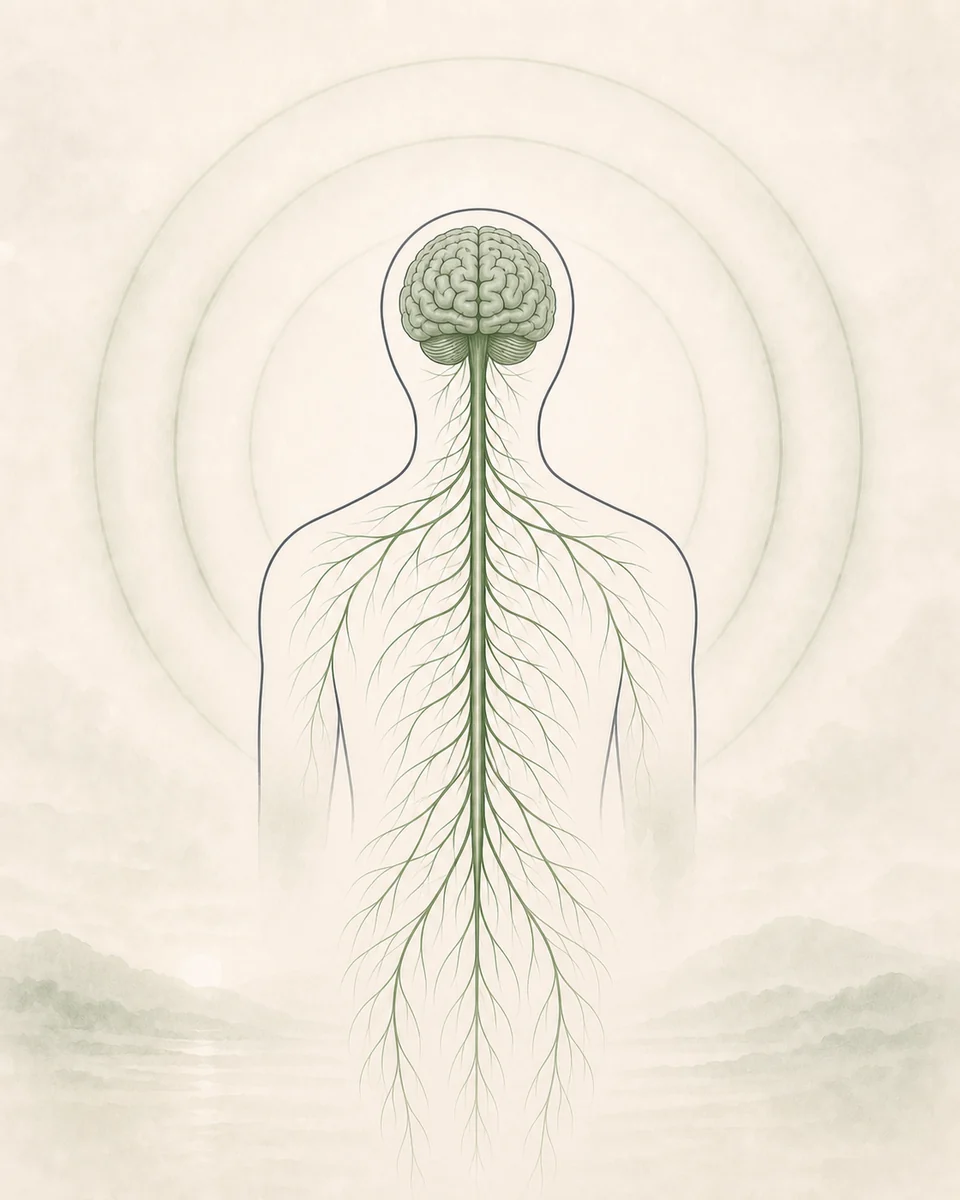
Your autonomic nervous system helps manage automatic functions such as heart rate, breathing, digestion, and blood pressure. Its sympathetic and parasympathetic branches work together to help you mobilize, recover, rest, and respond to what is happening around you.
Regulation does not mean staying calm all the time. A healthy nervous system still activates when something is difficult or dangerous, which is a good thing! We want the ability to hyper-focus, which helped us run from predators back in the day. Regulation is the ability to move flexibly between states and return toward your baseline after the stressor has passed.
You might notice nervous system up regulation as faster breathing, a racing heart, tense muscles, unsettled digestion, jumpiness, racing thoughts, or an urge to escape. These experiences can have many causes, both physically and mentally. They can even show up in the body as real chronic symptoms, like pain, fatigue and digestive issues.
Try this now
A 60-second nervous system reset
You do not need to complete every step perfectly. Move slowly, keep your eyes open if that feels better, and stop after any step that creates a small sense of support.
- 1
Look
With eyes open, name three neutral things you can see in the space you are in.
- 2
Feel
Notice your feet, seat, or back being supported. What does that feel like?
- 3
Breathe
Let the next three exhales become a little softer or longer.
- 4
Release
Unclench your jaw, hands, or shoulders by 5%.
Build your toolkit
7 practical ways to regulate your nervous system
Different nervous systems respond to different inputs. Treat these as options to test gently, not a checklist you have to finish.
Tool 01
Orient to where you are
Let your eyes move slowly around the room. Notice a color, a shape, or the way the light falls. You are giving your attention somewhere to go besides the internal alarm.
Try it: Find three things that feel neutral or pleasant to look at. This could be a chair, a wall, or a tree.
Tool 02
Make the exhale a little easier
Keep the breath comfortable rather than taking a very large inhale. Let the exhale become slightly longer or softer for a few rounds. Research suggests brief, structured breathing practices can support mood and reduce physiological arousal for some people.
Try it: Breathe in normally, then let the air out slowly. See if your exhales can be longer than your inhales. Repeat three to five times.
Tool 03
Use physical points of support
Notice where the chair, floor, or bed is holding your weight. Press your feet down gently, lean against a wall, or hold something with a reassuring texture. Let the support be something real and external to notice.
Try it: Notice two places where your body is supported right now and describe the pressure or temperature.
Tool 04
Move in a manageable way
A short walk, slow shoulder roll, gentle stretch, or shaking out your hands can give your attention and energy somewhere manageable to go. Regular physical activity can also support sleep and reduce feelings of anxiety. Choose movement that fits your body and medical guidance.
Try it: Move one area that feels comfortable for 30 seconds, then pause and notice whether anything shifted.
Tool 05
Borrow safety from connection
A steady voice, familiar face, supportive text, pet, or shared laugh can make a stressful moment feel less lonely. You do not have to explain everything you feel to benefit from connection.
Try it: Sit near someone you trust, send a simple check-in text, or listen to a familiar voice recording.
Tool 06
Support your basic rhythms
Sleep, regular nourishment, hydration, daylight, and activity all shape how much capacity you have for stress. They are not quick fixes. Think of them as steady background support for the system.
Try it: Choose the smallest useful next step: water, a snack, daylight, or beginning your wind-down routine.
Tool 07
Repeat what feels tolerable
Regulation is not a one-time reset. The best practice is usually the one you can repeat without turning it into another demand or a test you have to pass.
Try it: Pick one tool for the next week and notice how you feel before and after, without grading yourself.
Regulation and retraining
Related, but not identical
Regulation is the moment-to-moment ability to notice activation and move toward greater steadiness. A grounding practice, easier exhale, short walk, or supportive conversation may help your system shift right now.
Nervous system retraining is the broader learning process that happens through repetition. It may include changing the meaning of symptoms, reducing fear and avoidance, building evidence of safety, and responding to stress with more choice over time.
So, if you are wondering how to retrain your nervous system, start with practices that feel tolerable, but do not expect one calming exercise to do all the work. Retraining is the pattern of learning that those repeated experiences can support.
Explore whether your symptoms show mind-body patternsWant to turn these ideas into a guided routine? Explore Nervana's mind-body app.
For chronic symptoms
Practice nervous system safety for chronic symptoms
Chronic pain, fatigue, dizziness, digestive symptoms, migraines, and other persistent symptoms are real, physiological changes in the body. But once urgent and relevant medical causes have been assessed, research has shown that addressing the underlying nervous system and brain-body patterns can help with recovery.
How? By teaching your nervous system that it is safe through somatic exercises, reflection, education and more. The goal is to show your system that there is no metaphorical tiger chasing you!
How Nervana supports the practice
One place to learn, practice, reflect, and notice change
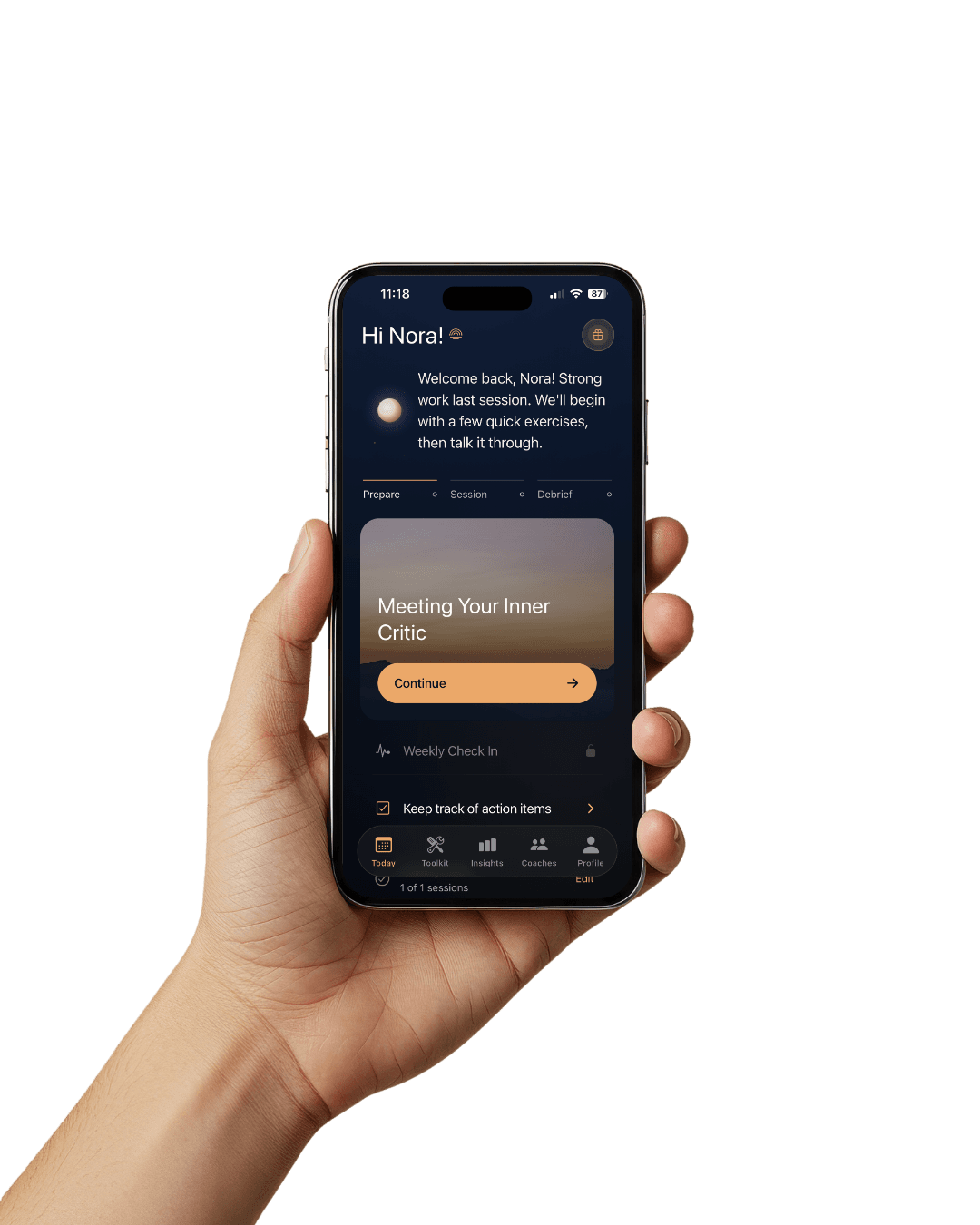
Nervana turns the ideas in this guide into a gentle, self-paced routine for people living with persistent symptoms.
- 01
Learn
Bite-sized education makes the brain–body connection easier to understand.
- 02
Practice
Guided grounding and nervous system exercises help you apply the ideas in real moments.
- 03
Reflect
Journaling and personalized voice coaching help you explore stress, fear, and recurring patterns.
- 04
Notice
Track symptoms, quality of life, and the observations that may help you see change more clearly.
Is Nervana a sensible next step for you?
Nervana may be useful if
- Your symptoms have been medically evaluated and scans and tests come back normal, or you are not improving the way your medical team expects.
- You want to explore a brain–body or nervous-system lens and want a structured way to learn and practice rather than collecting more disconnected tips.
- Short, self-paced education, guided exercises, reflection, and coaching feel approachable to you.
- You understand that Nervana is educational coaching and does not diagnose or replace medical care.
Nervana may not be useful if
- Your symptoms are new, severe, rapidly changing, or have not yet been medically assessed.
- You may need urgent or emergency care, a diagnosis, testing, or a medication decision.
- A clinician has advised you to seek further evaluation or treatment before trying self-guided support.
- You are looking for a diagnosis or a replacement for medical care.
Not sure? Take a short quiz to learn more.
Take the symptom quizKeep nearby
Free nervous system regulation resources
Save these Nervana guides to revisit when it is hard to remember the steps.
Nervous system techniques infographic
A printable one-page reminder of gentle regulation techniques.
Download PDFYour nervous system is not damaged
A visual reframe for chronic symptoms through a nervous-system safety lens.
Download PDFHow neuroplastic symptoms happen
A visual guide to how symptom signals can be learned and begin to change.
Download PDFCommon questions
Nervous system regulation FAQ
How can I regulate my nervous system quickly?+
Start with one small signal of safety: look around and name three neutral things you see, feel the support beneath your feet or body, and let a few exhales become slightly longer without forcing a deep breath. The aim is a small shift toward steadiness, not instant perfect calm.
How long does nervous system regulation take?+
A brief practice may help you feel a small change in a minute or two, but building flexibility usually comes from repeating manageable practices over time. Progress can look like recovering sooner after stress, noticing tension earlier, or having more choice in how you respond.
Why can breathing exercises make me feel worse?+
Large, fast, or overly controlled breaths can feel uncomfortable and may cause lightheadedness. Breath-focused attention can also feel activating for some people. Return to normal breathing and try an external practice such as looking around the room, feeling your feet, listening to music, or taking a gentle walk.
Can nervous system regulation cure chronic symptoms?+
Regulation skills can support stress recovery and may be one useful part of care, but they are not a diagnosis or guaranteed cure. Chronic symptoms can have many causes. New, severe, or worsening symptoms should be medically evaluated, and these practices should complement appropriate care rather than replace it.
Is nervous system dysregulation a medical diagnosis?+
People often use the phrase to describe feeling stuck in a heightened or shut-down stress response, but it does not identify one specific medical condition. Similar experiences can have many physical and psychological causes, so persistent or concerning symptoms deserve professional assessment.
Evidence and transparency
Sources and further reading
This guide combines established autonomic nervous system education with low-intensity practices that people can adapt to their own needs. Research does not show that one technique works for everyone, and regulation skills are not a replacement for individualized care.
- NCBI Bookshelf: Anatomy of the autonomic nervous system
- Cell Reports Medicine: randomized study of brief structured breathing practices
- CDC: health benefits of physical activity for adults
- Association for the Treatment of Neuroplastic Symptoms (ATNS)
- JAMA Psychiatry: randomized clinical trial of pain reprocessing therapy for chronic back pain
- JAMA Network Open: randomized clinical trial of emotional awareness and expression therapy for chronic pain
Important note: Nervana is an educational nervous-system coaching program and not medical care. If you have new, severe, or worsening symptoms, please seek medical evaluation and follow your clinician's guidance. This guide is general information and not medical advice.